While modern medicine has mapped every organ, bone, and tissue in the human body, ancient healing traditions have long recognized another layer of our anatomy that exists beyond what we can see under a microscope. This spiritual anatomy, often called the energy body or subtle body, offers a framework for understanding how our consciousness, emotions, and life force interact with our physical form.
The Foundation: Life Force Energy
At the heart of spiritual anatomy is the concept of vital life force. Known as prana in Sanskrit, chi in Chinese medicine, and ki in Japanese traditions, this animating energy flows through and around us, sustaining both body and consciousness. When this energy flows freely, we experience vitality, clarity, and wellbeing. When blocked or depleted, we may feel exhausted, foggy, or emotionally stuck, long before physical symptoms appear.
This isn’t merely poetic language. Practices like acupuncture, which work directly with energy channels, have demonstrated measurable effects on pain, inflammation, and nervous system regulation, suggesting these traditional maps of energy flow correspond to real physiological processes we’re only beginning to understand through Western science.
The Chakra System: Energy Centers
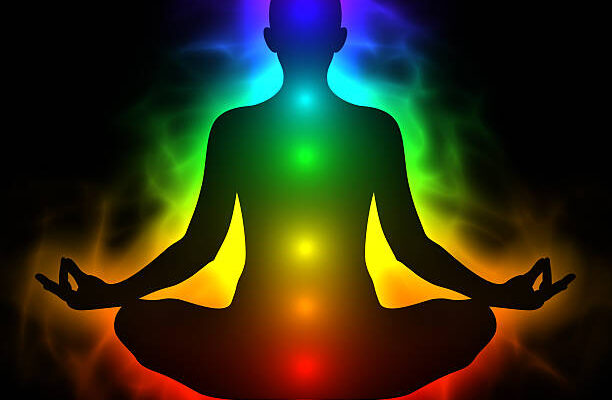
Perhaps the most widely known aspect of spiritual anatomy is the chakra system, originating from ancient Indian yogic traditions. Chakras are understood as spinning wheels or vortexes of energy located along the central channel of the body, from the base of the spine to the crown of the head.
The seven primary chakras each correspond to specific physical locations, endocrine glands, and aspects of our psychological and spiritual experience. The root chakra at the base of the spine relates to survival, safety, and grounding. The sacral chakra governs creativity, sexuality, and emotional flow. The solar plexus holds our personal power and sense of self. The heart chakra bridges the physical and spiritual realms, connecting love, compassion, and emotional healing.
Moving upward, the throat chakra governs communication and authentic expression. The third eye, located between the eyebrows, relates to intuition, insight, and inner vision. Finally, the crown chakra at the top of the head represents our connection to consciousness itself, transcendence, and spiritual understanding.
When these energy centers function harmoniously, we experience balance across all dimensions of our being. Imbalances in specific chakras manifest as corresponding physical symptoms or life challenges in related areas.
The Nadis: Energy Channels
Beyond the major chakras, spiritual anatomy includes an intricate network of energy channels called nadis in yogic tradition or meridians in Chinese medicine. Some texts describe 72,000 nadis throughout the subtle body, though three primary channels receive the most attention.
The central channel, called sushumna, runs along the spine from the root to the crown chakra. On either side flow ida and pingala representing lunar and solar energies, feminine and masculine qualities, rest and activity. When these channels are clear and balanced, energy can rise through the central channel, leading to expanded states of consciousness and profound healing.
In Chinese medicine, the twelve primary meridians correspond to major organ systems, and practitioners work with specific points along these channels to restore energetic balance and treat both acute and chronic conditions.
The Aura: Your Energetic Field
Extending beyond the physical body is the aura, layers of electromagnetic and subtle energy that surround and interpenetrate our form. While skeptics dismiss the aura as pseudoscience, research in biofield science has detected measurable electromagnetic fields around living beings, and practices like Kirlian photography have captured luminous emanations from the body.
The aura is typically described in layers, from the etheric body closest to the physical form to increasingly subtle emotional, mental, and spiritual layers. Our auric field interacts constantly with the energy of people, places, and environments around us, which is why certain spaces feel draining while others feel nourishing.
Practical Applications for Healing
Understanding spiritual anatomy isn’t merely theoretical. It offers practical pathways for healing. When we experience persistent physical symptoms, chronic pain, or emotional patterns that won’t shift, working with the energy body can address root causes that purely physical interventions might miss.
Practices like yoga, qigong, and tai chi specifically cultivate and balance life force energy. Meditation and breathwork clear energetic blockages and calm the nervous system. Energy healing modalities such as reiki, acupuncture, and sound healing work directly with chakras, meridians, and the auric field. Even simple awareness of your energy body, noticing where you feel open or constricted, vibrant or depleted, can guide you toward what your system needs.
Bridging Ancient Wisdom and Modern Understanding
As neuroscience explores the gut-brain axis, the heart’s electromagnetic field, and the role of fascia in storing trauma, we’re discovering that our ancestors’ maps of subtle energy may have been describing real phenomena through a different lens. The spiritual anatomy framework reminds us that we are more than mechanical bodies. We are integrated systems of matter, energy, and consciousness, each layer influencing the others.
By honoring both our physical and energetic dimensions, we open ourselves to more complete healing and a deeper understanding of what it means to be fully alive.